What you’ll learn
- How patent examiners actually work: Understanding their responsibilities, examination processes, internal procedures and the practical realities of working at the USPTO.
- How patent applications are assessed: An accessible explanation of patent eligibility, novelty, non-obviousness, written description, enablement and other examination requirements.
- Why patent claims matter: How claim language defines the scope of protection and why apparently small wording differences can significantly influence examination outcomes.
- How to navigate patent prosecution: Understanding office actions, objections, rejections, amendments, examiner interviews, continued examination and appeals.
- What makes arguments persuasive: Insights from an examiner's perspective into effective and less-effective approaches to responding to patent rejections.
- How to avoid unnecessary examination complications: Common drafting, formatting and communication issues that can generate avoidable objections or rejections.
- How the USPTO's working environment influences examination: Insights into examiner training, supervision, performance expectations and administrative procedures.
Who is this book best for
Patent attorneys and patent agents
Particularly valuable for practitioners involved in US patent prosecution who want to better understand how examiners approach applications, interpret claims, assess arguments and make examination decisions.
Independent inventors and entrepreneurs
A useful introduction for inventors seeking to understand what happens after filing a patent application, why applications receive rejections and how to work more effectively with their patent representatives.
IP offices and patent examiners
An interesting insider perspective on patent examination practice, examiner training, professional judgement and the importance of constructive engagement with applicants.
IP consultants and innovation advisors
Useful for professionals who help inventors, start-ups and research organisations understand patent processes and make informed decisions about protecting inventions.
Students and early-career IP professionals
An accessible introduction to the realities of patent examination that complements more formal academic and legal resources.
Why we selected this book
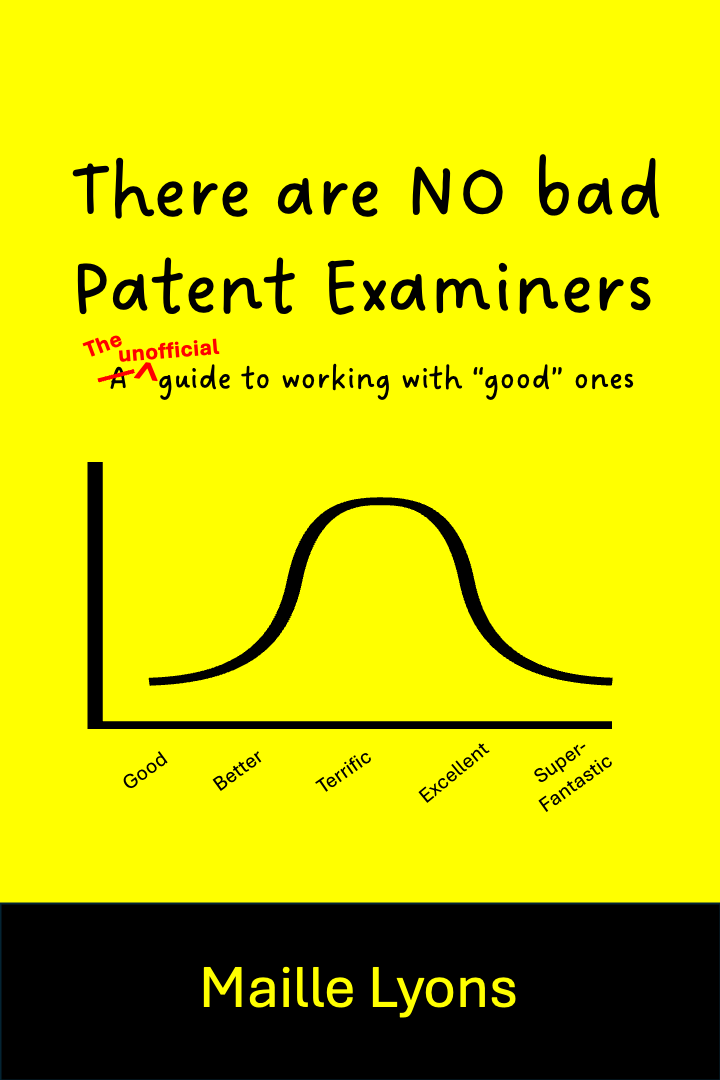
At weareip, we selected There are NO Bad Patent Examiners because it offers something that is not always found in conventional intellectual property publications: a candid, first-hand perspective on the people and processes behind patent examination.
Much of the literature on patents concentrates on legal requirements, drafting techniques, prosecution procedures and judicial decisions.
This book addresses an equally important dimension: what happens when a patent application reaches the examiner's desk, and how can inventors and patent professionals navigate that relationship more effectively?
One of its strongest contributions is the way Lyons challenges the perception of patent examination as an inherently adversarial process.
Examiners have a responsibility to assess whether an invention deserves patent protection and to establish an appropriate scope of exclusive rights. Patent attorneys, meanwhile, represent the interests of inventors seeking protection for their innovations.
These responsibilities are different, but they need not create an unnecessarily confrontational relationship.
Lyons makes a convincing case for understanding the examiner's perspective, communicating clearly and concentrating on the substance of the invention rather than treating prosecution as a contest between opposing sides.
Another distinctive feature is the author's willingness to reflect critically on her own experience. She discusses mistakes made earlier in her examining career, the lessons learned through training and mentorship, and how her approach evolved over time.
This gives the book credibility beyond its technical explanations. It reminds readers that patent examination involves professional judgement, continuous learning and human interaction, not merely the mechanical application of legal rules.
We also particularly appreciate the author's use of humour.
From the deliberately exaggerated title to the repeated reminders that the book is unofficial, unsanctioned, unendorsed, unsponsored and absolutely not legal advice, Lyons brings a refreshingly informal voice to a highly technical subject.
Behind the humour, however, lies a serious message: better understanding between inventors, patent professionals and examiners can contribute to a more effective patent examination process.
For us, that makes this book more than an entertaining introduction to patent prosecution. It is also a valuable contribution to how intellectual property knowledge can be communicated in a clearer, more accessible and more human way.
Editorial note
This book focuses primarily on the United States patent system and reflects the author's personal experience as a former USPTO patent examiner, particularly in biotechnology.
It is an independent publication and is not an official USPTO guide or an authoritative statement of USPTO policy.
Some of the author's observations, interpretations and suggested approaches reflect personal professional experience rather than universally applicable examination practices. Patent laws, examination procedures and administrative policies may also change over time.
The book should therefore be read as an educational and practical insider perspective, rather than a substitute for professional legal advice or official examination guidance.
Affiliate disclosure
Some links on this page may be affiliate links. If you buy a book through these links, weareip may earn a small commission at no extra cost to you. As an Amazon Associate, we earn from qualifying purchases.